The marketing dashboard that comes with every plan.
Every change to your website, SEO and ads is logged here next to the result it produced. You approve the work by text, and the dashboard is where you can check it later.
What is the askotter marketing dashboard?
The askotter marketing dashboard is the web view of everything askotter does for a business, included with every plan at no extra charge. It lists each change to the website, SEO and ads with who approved it and when, next to results from the owner's own Google and ad accounts.
- Where the numbers come from
- Your own Google Search Console, GA4, Google Business Profile and ad accounts. You keep ownership of each one.
- Price
- Included in every plan, from $99/mo self-managed.
- Not for
- Teams that want a standalone BI tool to build their own reports. The dashboard reports on the marketing askotter runs.
See where the work hours went, on a real client's account.
These are PodRent's screens (podrent.com), captured from the askotter app on October 23, 2026. Every hour spent on the site leaves a dated row: what was asked, what changed, whether it is live, and later whether it moved the numbers. You can see where the budget went without asking anyone.
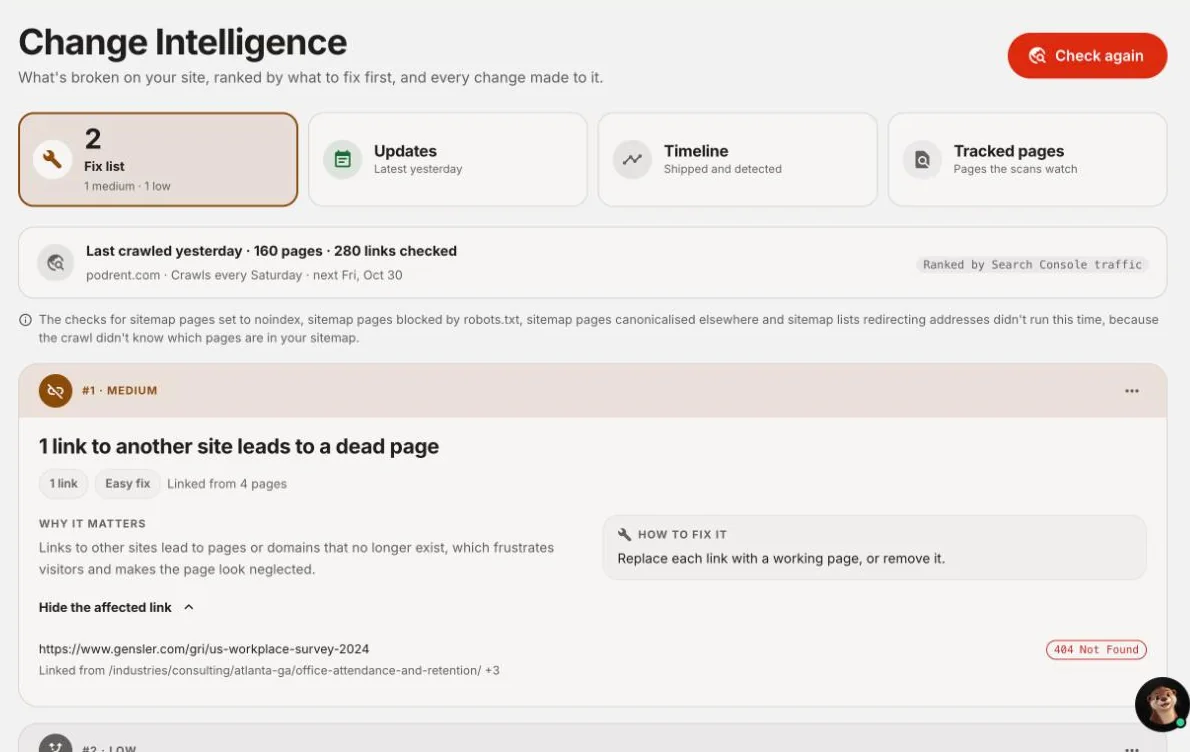
What is broken, ranked by the pages people actually visit.
Every Saturday askotter crawls the site. The last pass on podrent.com checked 160 pages and 280 links and left two items open: one medium (an outside link that now returns 404, used on 4 pages) and one low. Each item says why it matters and how to fix it.
What it tells you. A short fix list means the hours this week went into new work. A long one means cleanup is eating the budget, and you can see it before the invoice does.
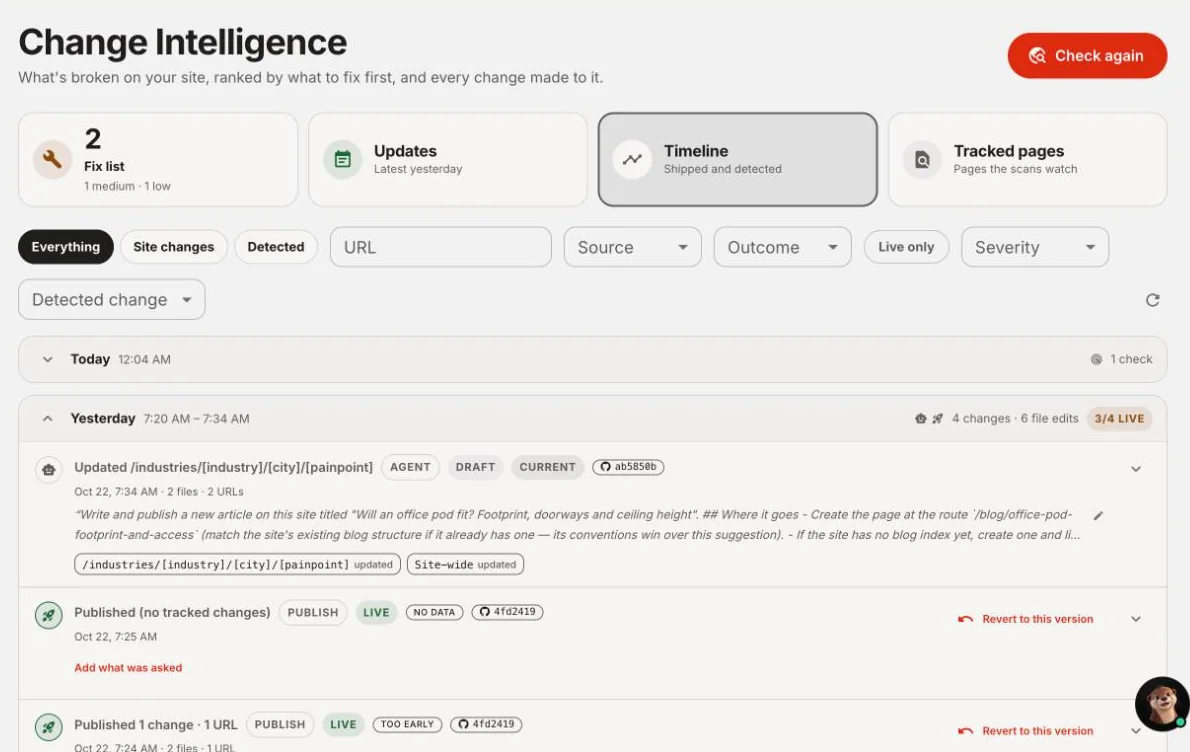
Every working session, with the time it started and stopped.
On October 22 PodRent's site had two sessions before 8am: 7 changes across 15 file edits between 5:24 and 6:15, then 4 changes across 6 file edits between 7:20 and 7:34, three of them live. Open a row and you read the request in the words it was given, the pages it touched, and a revert.
What it tells you. This is the timesheet. You can count the sessions, see how long each took and what it produced, and undo anything you did not want.
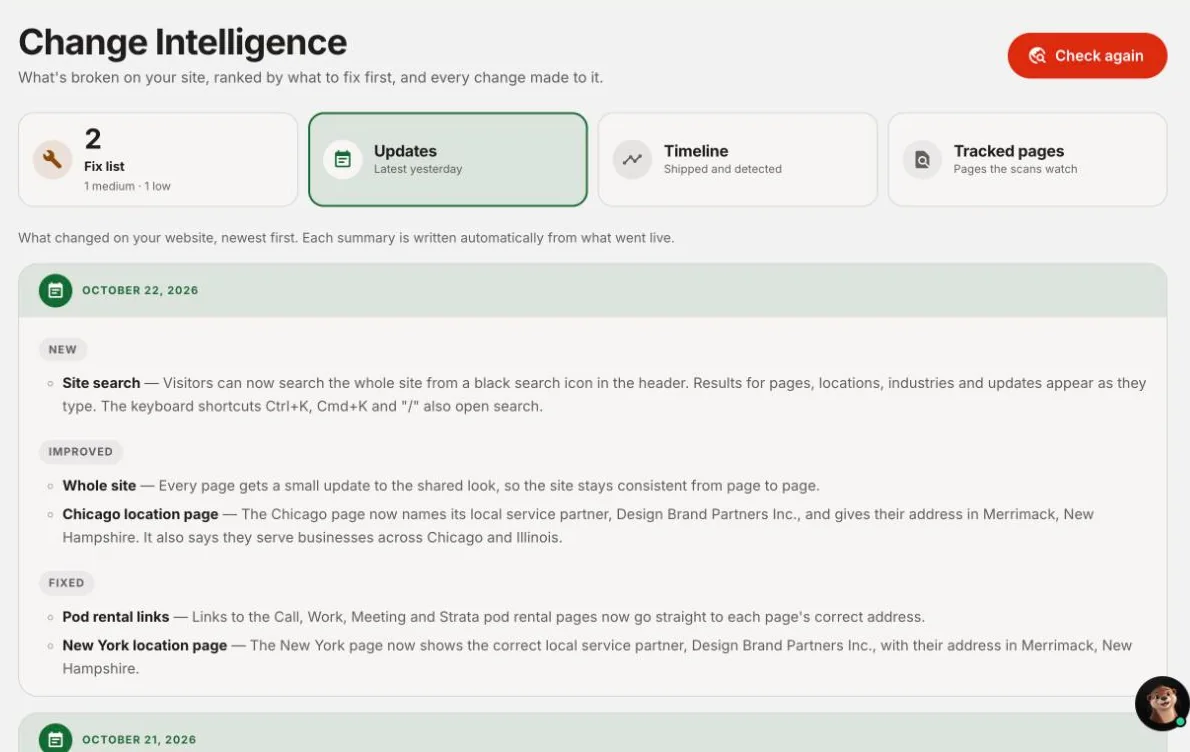
The same work, written up in plain English.
askotter writes a dated summary from what went live, grouped as new, improved and fixed. October 22 on podrent.com: site search added to the header, the Chicago and New York location pages corrected, and the links to each pod rental page repaired.
What it tells you. This is the version you forward to a partner or read on your phone. If a week has no entry, no work shipped that week.
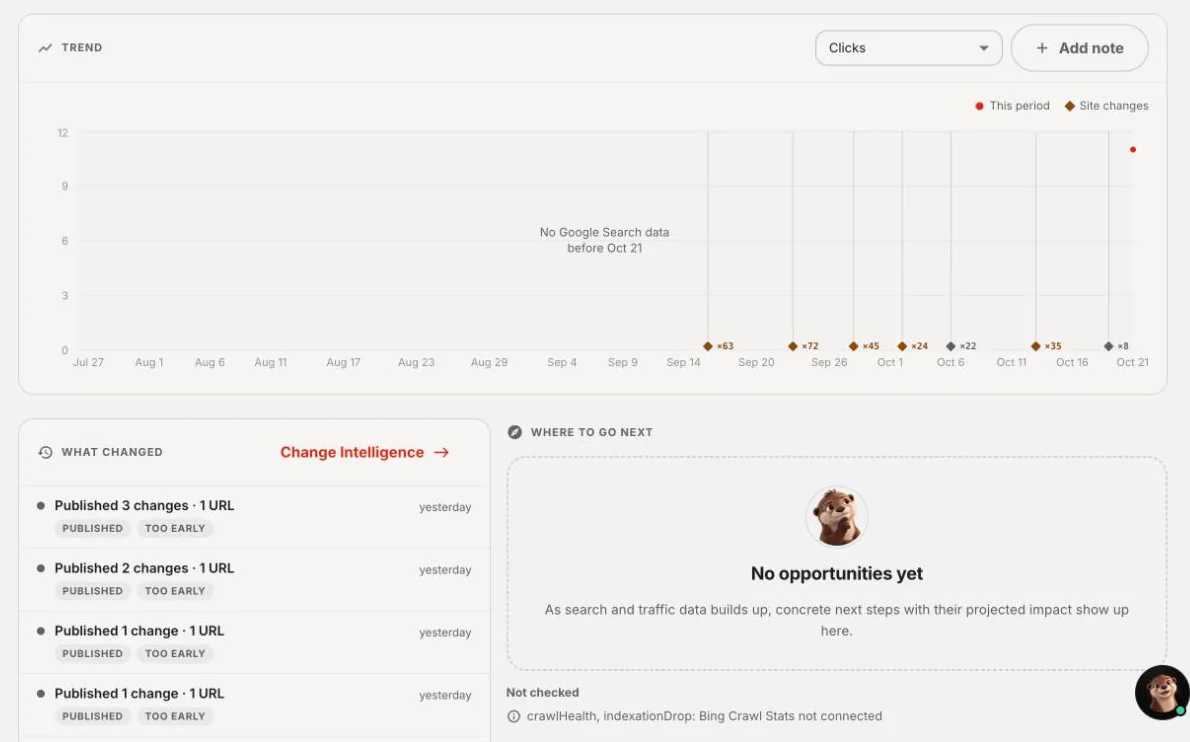
Changes pinned to the chart, so you can line work up with results.
Each diamond on the clicks chart is a batch of site changes, with its count. Next to it, every change carries a verdict. PodRent connected Search Console on October 21, so the chart is short and each verdict reads "too early" until there is enough data to judge.
What it tells you. You see which hours turned into visits and which did not, and askotter will not call a result before the numbers can support it.
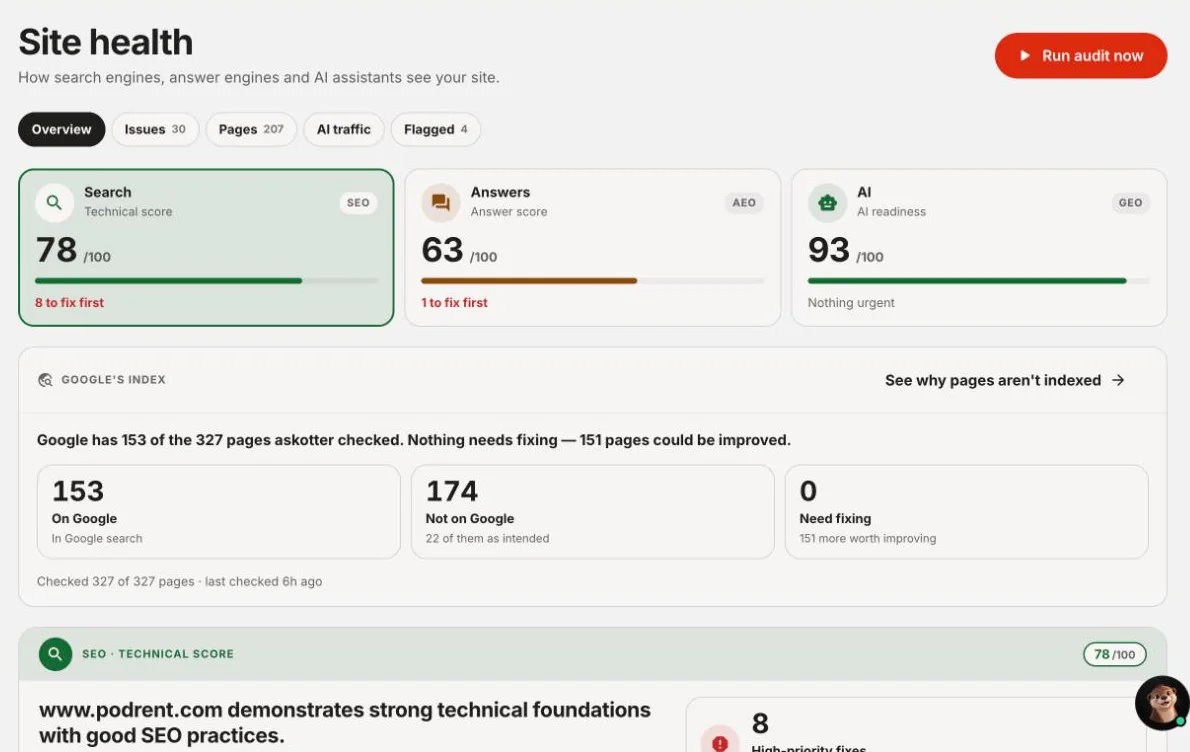
How Google and the AI assistants see the site today.
Three scores, each with the number of things to fix first: search 78 (8 to fix), answers in AI search (AEO) 63 (1 to fix) and AI readiness 93. Google has 153 of the 327 pages askotter checked, and the page lists which ones are missing and why.
What it tells you. The scores tell you where the next hour is best spent. Search has the most open fixes on this account, so that is where the time goes first.
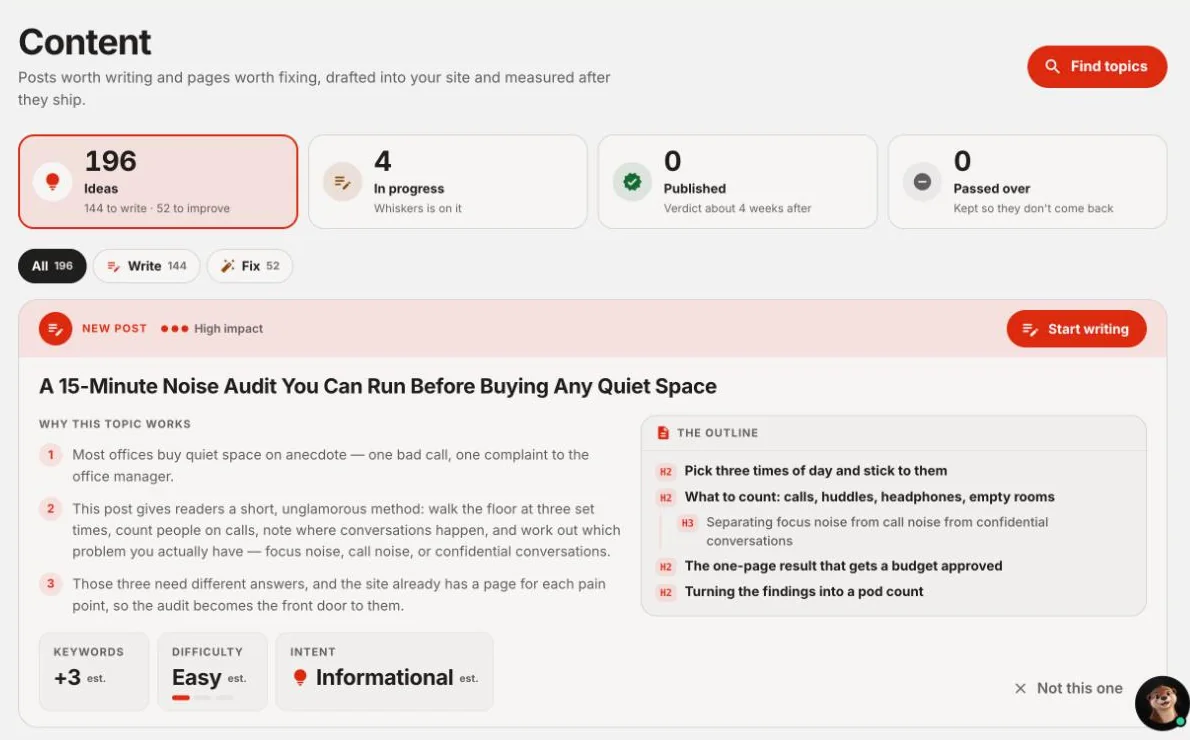
The queue of posts and page fixes, before any time is spent on them.
PodRent's queue holds 196 ideas: 144 posts to write and 52 pages to improve, with 4 in progress. Each one shows why the topic should work, an outline, the difficulty and the expected search gain. Published pieces get a verdict about four weeks after they ship.
What it tells you. You can pass on an idea before an hour goes into it, and later see whether the hours that did go in paid off.
Captured October 23, 2026. Search Console was connected two days earlier, so the traffic figures are early.
You approve changes by text, and the dashboard keeps the record.
Each decision arrives as one text saying what changed and what the fix would be. Reply YES and it goes live; UNDO still works afterwards, from the text thread or the row in the log.
An illustration of the product, rebuilt in HTML for this page. The clinic, the domain, the phone number and every figure in it are invented. Every yes becomes a row in your activity log with a one-click undo. Nothing changes on your site without your yes, and every change can be undone.
Search, ads and booking results from your own accounts.
Each change is pinned to the chart where it happened, with a sentence on what it did to calls, bookings or visits. See how the local SEO services and PPC management feed these numbers, and which accounts connect on the integrations page.
An illustration of the product, rebuilt in HTML for this page. The clinic, the domain, the phone number and every figure in it are invented. Dollar figures use the value you set for a booking. We never invent one for you. Nothing changes on your site without your yes, and every change can be undone.
Questions about the marketing dashboard
Is the marketing dashboard free?
Do I have to log in to use askotter?
Can I see what askotter changed on my website?
What happens to my data if I cancel?
Connect your Google accounts and send the first text.
Setup takes under an hour. Compare plans on the digital marketing pricing page.
Self-managed is $99/mo and scales with the compute you use. Our team runs it from $600/mo.